Tag: love
-
What relationships have a positive impact on you?
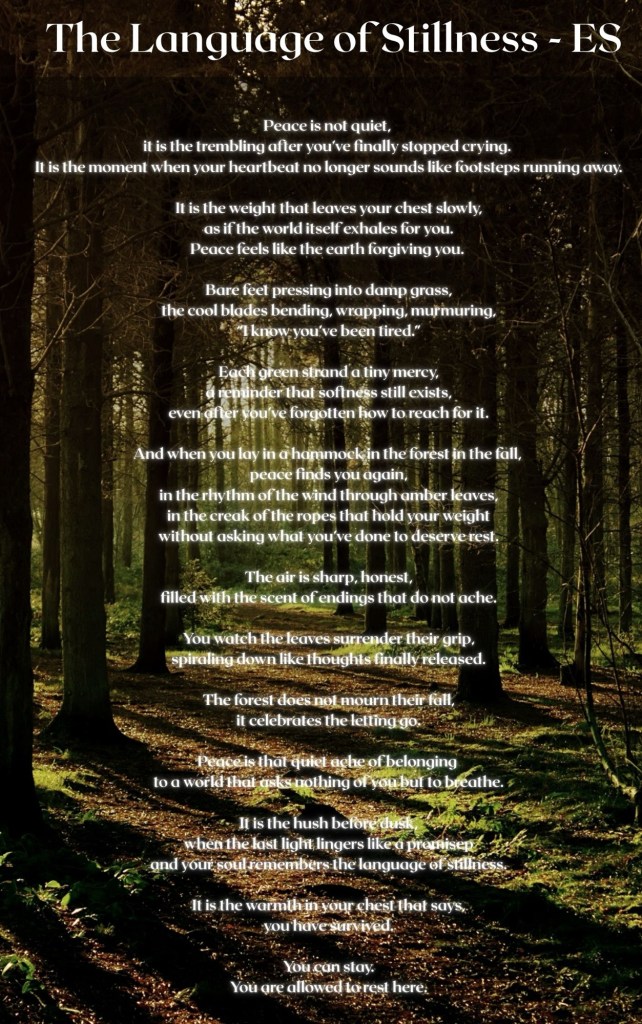
The relationships that help me most are the ones that change how gravity works.
Not the loud, dramatic ones. The quiet ones that don’t rush to stabilize me, don’t grab my arm when I lean too far over the edge. They just stay close enough that I know I won’t disappear if I fall. There’s a difference between being held and being controlled, and the good relationships understand that instinctively.
These are the people who don’t interrupt my patterns just to feel useful. They don’t confuse care with correction. They let me circle the same thoughts, tell the same story from a new angle, sit inside contradictions without demanding resolution. They know that repetition isn’t stagnation. Sometimes it’s how the nervous system learns it survived.
The best relationships also don’t need me to be narratable. I don’t have to package my pain into something inspirational or tidy. I can show up unfinished. Mid-thought. Mid-collapse. And nothing about the bond feels threatened by that. No scorekeeping. No silent recalculations.
What makes them positive isn’t that they make life lighter. It’s that they make it bearable without distortion. I don’t have to pretend I’m stronger than I am or weaker than I am. I can exist at my actual weight.
And that kind of relationship doesn’t change who I am.
It just removes the need to constantly brace for impact.
-
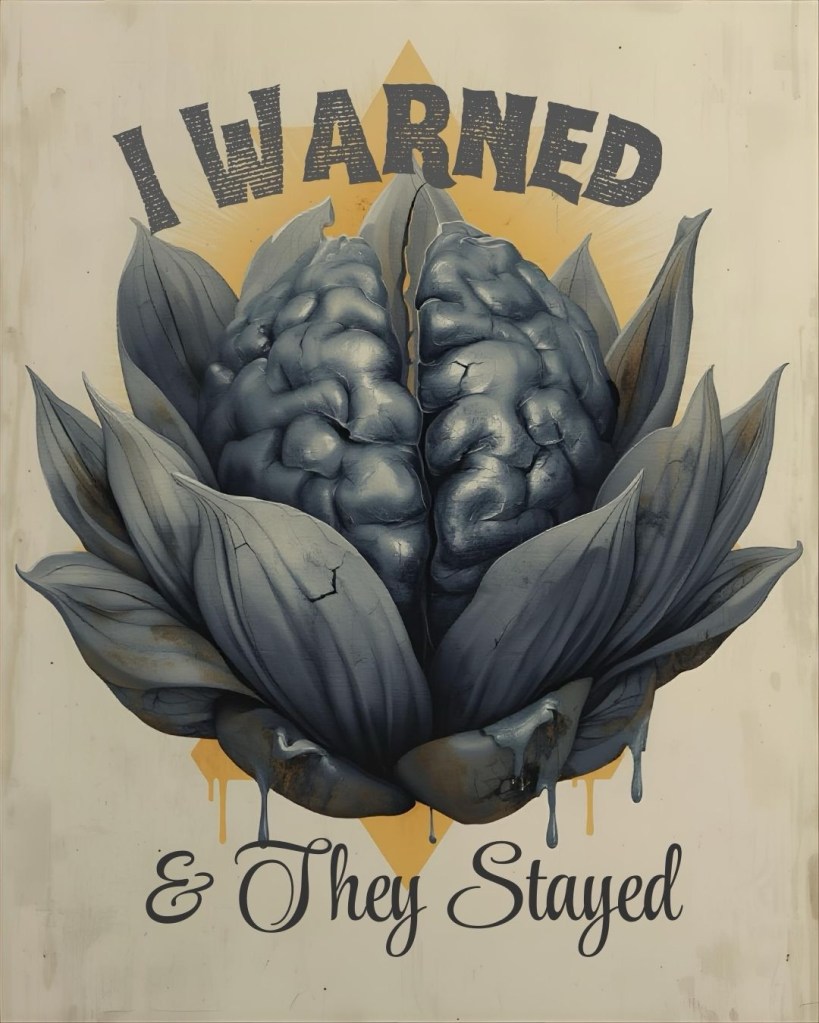
The relationships that helps me the most are the ones where I don’t have to pretend I’m simpler than I am. Where I don’t have to translate myself into something softer so I’m easier to keep. These are the relationships where I can say the thing I’m ashamed of saying and watch the room not empty. That alone is a kind of mercy. Because most of my life has taught me that honesty is expensive and usually paid for with abandonment.
They help because vulnerability is allowed to be ugly. Not cinematic. Not brave. Ugly like saying I’m jealous when I shouldn’t be. Ugly like admitting I want reassurance even though I hate needing it. Ugly like knowing exactly why I’m like this and still being unable to stop it. The people who matter don’t try to spin that into growth. They let it be what it is. Pain that learned how to speak.
These relationships hurt because they see me clearly. Not the curated version. Not the version that functions well at parties. They see the intensity, the spirals, the way I love like I’m trying to make up for something I lost before I had language. And somehow they don’t flinch. Which is terrifying, because being seen means I can’t pretend I’m misunderstood anymore. I am understood. And still chosen. That’s worse, actually.
Dark humor is how I survive intimacy. If I joke about my damage and you laugh, it’s not because it’s funny. It’s because we both know how bad it really is. Humor is how I ask, “Can you sit with this?” without saying it out loud. When someone laughs gently instead of minimizing it or getting scared, I know they’re not here to fix me or flee me. They’re here to stay and witness.
What cuts the deepest is realizing I am loved not just as a project, but as a person with benefits. I bring care. I bring attention. I bring loyalty that borders on feral. I remember things. I feel things. I notice shifts in tone like a survival skill. The right people don’t see my depth as a liability they tolerate. They see it as the reason the connection feels real, even when it’s heavy enough to bruise.
The relationships that help me the most don’t save me. They don’t make me whole. They don’t cure the ache that lives under my ribs. They just don’t ask me to lie about it. They let me be complicated, painful, loving, exhausting, and real all at once. And somehow, in a world that usually demands I be less, that hurts in a way that feels like relief.
-
What are your biggest challenges?
My biggest challenge as a person is myself, which sounds poetic until you realize it means I wake up every day already in a fistfight. My brain is not a helpful narrator. It is a hostile commentator with a megaphone, a clipboard, and a lifelong vendetta. I don’t have thoughts so much as internal performance reviews that I am consistently failing. There is no off switch. There is no appeal process. HR is still me and deeply unqualified.
As a writer, this is inconvenient but productive. As a human being, it is a full-time demolition project. I don’t struggle to create. I struggle to allow anything I make to live without interrogation. I have “just right” OCD, which means I will rewrite something until it feels aligned with a standard that I cannot define and will never meet. If one word feels wrong, I will tear the entire piece apart like a raccoon discovering drywall. The result is excellent writing and a personality best described as “permanently on edge.”
This process has cost me sleep, hair, and whatever delusion I once had about being chill. I am extremely dedicated to my craft in the same way people are dedicated to destructive coping mechanisms. The work improves. I unravel. We call it balance.
My mental health, broadly speaking, is a haunted house with a very ambitious renovation plan. I am constantly trying to improve myself. Heal myself. Optimize myself. Fix myself. I am one self-help book away from snapping. The cost of improvement is so high it feels like a scam, but I keep paying it anyway, convinced that the next upgrade will finally make me tolerable to exist inside. I chase growth like it’s going to apologize to me one day.
I use humor as a coping mechanism because if I don’t laugh, I will simply sit still long enough to feel everything at once, which feels medically inadvisable. Sometimes life is not funny at all. I will still make a joke. This is not bravery. This is emotional duct tape. If something is devastating, I turn it into a bit. If it’s unbearable, I sharpen it into sarcasm and hand it to you like a party trick. Please clap. Do not ask follow-up questions.
I am deeply obsessed with the concept of being enough. I know enough is fake. I know it doesn’t exist. I know it’s a social construct held together by vibes and trauma. None of this stops me from chasing it like it owes me money. The other side of enough is not peace. It is a concrete slab. I did not step onto it carefully. I sprinted, launched myself headfirst, cracked my skull, and lay there blinking like, “Wow. That seemed unnecessary.” I will absolutely do it again.
I hurt myself more than anyone else ever could. I am my own worst critic, coach, abuser, and motivational speaker. I apply pressure exactly where I am already wounded, then act surprised when it hurts. I demand constant improvement and then shame myself for needing rest. I tell myself I should be better by now without ever agreeing on what better actually means. I rewrite my life the same way I rewrite my work, convinced that if I just cut enough, refine enough, suffer enough, I’ll eventually earn permission to exist without flinching.
It’s all fun and games until it’s not fun and I realize I was never playing a game. At some point, the jokes stop working. The humor slips. The coping mechanisms creak. And I’m left holding the weight of my own expectations like a weapon I forgot I was pointing inward.
And yet. I keep going. I keep writing. I keep trying. Not because I’m well-adjusted, but because something feral in me refuses to quit. If I’m going to live inside this brain, I might as well turn the chaos into something useful. If I’m going to bleed, I might as well bleed onto the page. And if I’m going to laugh while doing it, it’s because laughter is the only thing my brain hasn’t figured out how to weaponize against me yet.

-
Daily writing promptWhat are your thoughts on the concept of living a very long life?
I don’t think I want a long life because I think it would be beautiful or enlightening or whatever the brochures promise. I want it because apparently I have a personality defect that makes me stay.
Living a very long life would hurt. Like, deeply and consistently. I would watch the same terrible patterns repeat, just with better PR. I’d see harm get a rebrand, a podcast, maybe a wellness filter. I’d outlive people who knew me before certain parts of me calcified. That kind of grief doesn’t go away. It just becomes structural. Load-bearing.
I wouldn’t age into wisdom. I’d age into a walking archive of “I told you so,” which is not as satisfying as it sounds. Memory isn’t a gentle teacher. It’s more like an unpaid intern who keeps resurfacing every worst moment at the worst possible time. Some days I’m pretty sure a long life would straight-up take me out. I already get tired of noticing everything. Of feeling everything. Of being the person whose nervous system apparently signed a lifetime contract without my consent.
I’m not noble about this. I don’t wake up glowing with purpose. I spiral. I dissociate. I make jokes that are probably too dark for polite company and then immediately apologize to no one in particular.
But I also don’t think the answer is going numb or opting out.
One of the most brutal things about being human is how convincing loneliness can be. Pain is excellent at gaslighting. It tells people they’re dramatic, broken, uniquely defective. I know how lethal that isolation gets. I know what happens when suffering thinks it’s an original sin instead of a recurring design flaw.
So if I lived a very long life, it wouldn’t be to save the world. I don’t have that kind of delusion. It would be to keep showing up and saying, yeah, no, you’re not insane. This happened. It messes people up. You’re reacting exactly like a human would, unfortunately.
I don’t want to fix humanity. I just want to be the person who doesn’t vanish when things get uncomfortable. The one who doesn’t rush people toward healing so they’ll be quieter and easier to digest. The one who sits in the mess and makes a joke sharp enough to remind you that you’re still alive.
Hope, for me, isn’t optimism.
It’s stubbornness with a sense of humor.
A long life wouldn’t make me happier or purer. It would make me more scarred, more tired, and way too self-aware. But if it also meant fewer people feeling like they’re the only one rotting quietly inside their own head, even briefly, then fine. I’ll stay.
I don’t want a long life to avoid pain. I want it so pain doesn’t get the satisfaction of thinking it won alone.


 E.S. Poetry & Writing